Blueland’s starter-kit and refill SEO architecture
How Blueland separates the first purchase from replenishment, and what subscription, refill and consumable Shopify brands can do to make those journeys clearer in search and AI answers.

A refill business serves at least two audiences on the same storefront. A first-time buyer needs the complete system explained. A returning customer often knows the format and wants the fastest route to the correct refill. Treating both journeys as one undifferentiated collection creates friction for people and ambiguity for search.
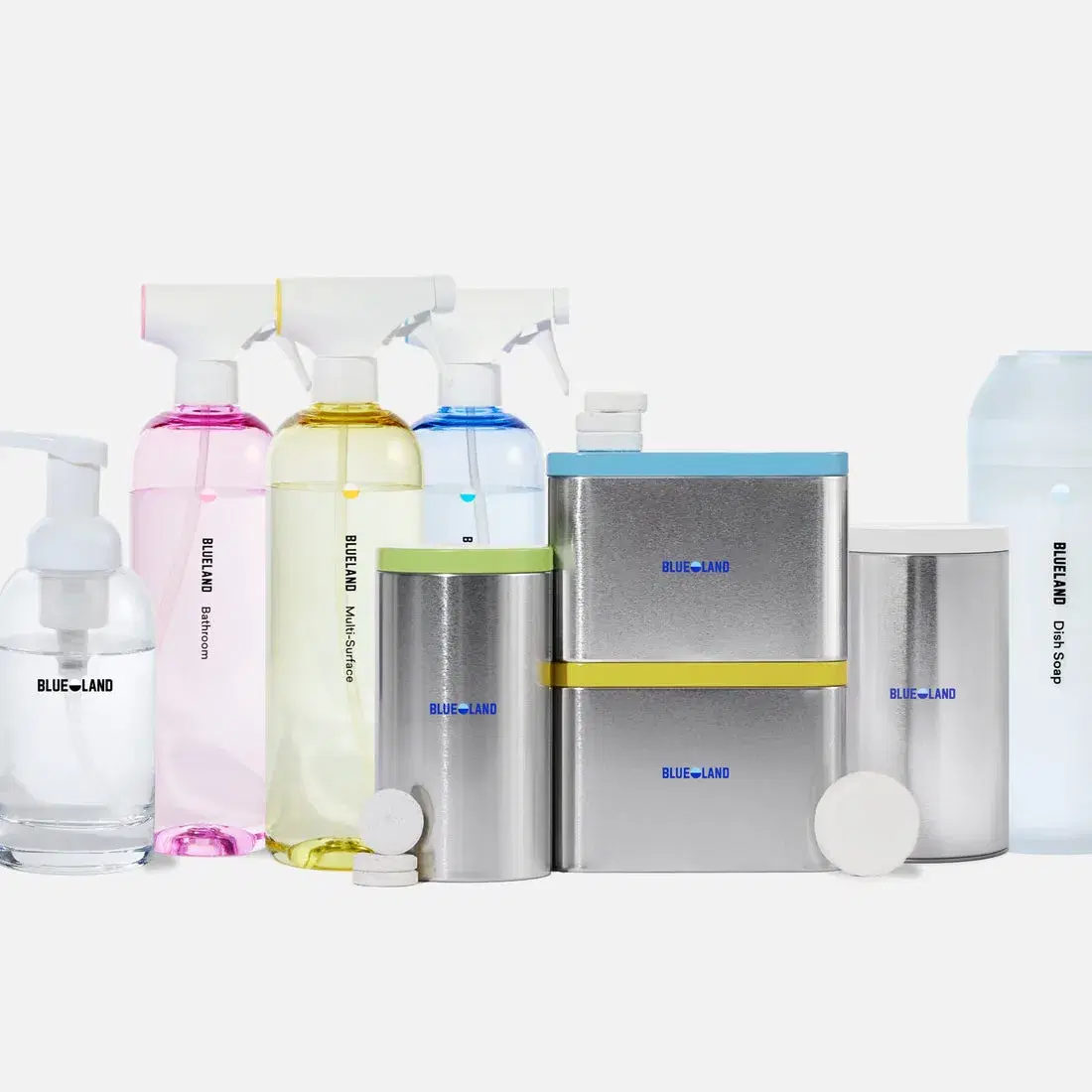
Show the complete starting system
The product family is pictured together so a new customer can see bottles, dispensers and refill formats as one system.
Pair the image with a written inventory. A customer and a search system should not have to infer what is included from the photograph.
The first order is described explicitly
The Clean Essentials page lists four reusable vessels and their initial refill tablets. It separately describes recurring refills and the purchase-plan choice. That separation answers a question generic subscription language often misses: what physically arrives now, and what arrives next? Blueland — Clean Essentials Kit ↗
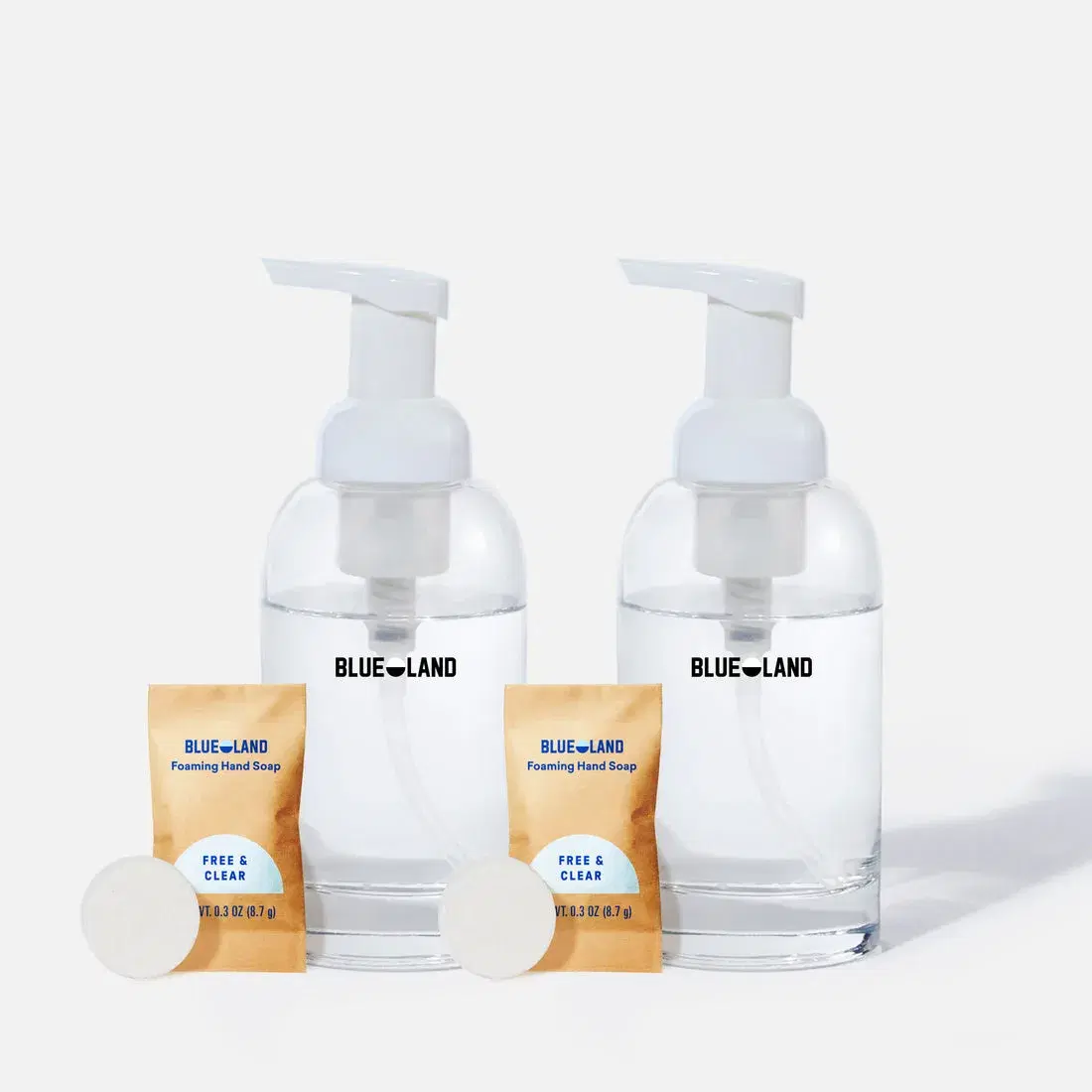
Show the reusable part beside the refill
The bottle, refill packet and tablet appear together. The relationship is visually obvious before a shopper reads the details.
For every system product, show the durable component and consumable together, then state compatibility, quantity and cadence in text.
| Page job | Question it must answer | Minimum useful content |
|---|---|---|
| Starter kit | What do I need to begin? | Everything included, setup, initial quantity, compatibility, one-time price and any recurring option. |
| Refill collection | Which refill fits what I own? | Product compatibility, pack quantity, expected usage range and direct routes to each refill. |
| System comparison | Which starter configuration suits me? | Room or task coverage, vessel count, refill formats, price and honest exclusions. |
Where refill competitors can do better
- Use the same system and refill names across navigation, product titles and support content.
- Put compatibility near the product title and repeat it in structured data only where a supported property exists.
- Explain estimated cadence as a range with assumptions, not a universal promise.
- Keep one-time purchase and subscription terms visually distinct.
- Link discontinued vessels to compatible refills or a clear replacement path.
- Create a printable or saveable first-use sequence when setup has several steps.
The GEO opportunity is a complete answer
Queries about refill products are relational: “Which tablet works with this bottle?”, “What comes in the starter kit?” or “Can I buy refills without subscribing?” A page that names both sides of that relationship gives an answer engine a clearer source. Essential facts should be visible on the public page rather than available only after opening a chat widget.
A four-week implementation plan
- Inventory every starter product, durable component and compatible refill.
- Resolve naming differences and define one maintained compatibility source.
- Build or improve the starter, refill and comparison destinations.
- Add reciprocal links from every included product and relevant help page.
- Validate price, availability and variant data across the rendered page, structured data and feeds.
- Measure non-brand queries, refill-path use and avoidable compatibility questions.
Use the product facts, compatibility and limitations to build a Shopify product answer brief.
We study the whole buying journey.
Our work stays focused: Shopify SEO and GEO.