Desk product photography: 3 Ugmonk frames, 3 useful lessons
A focused photography collection studying light, product-in-use context and scale in Ugmonk’s desk accessories. Includes a practical brief for your own shoot.
 Ugmonk
A desk is a difficult stage for a small product. Add too many attractive objects and the thing you are selling becomes a background extra. Remove all context and it can be hard to understand why the item belongs there. These three Ugmonk photographs offer useful ways to think about that balance.
This is a close reading of one brand’s published imagery, not a survey declaring a universal winner. Ugmonk owns the referenced work. Our observations concern the visible composition; we have not measured its commercial performance.
01 / The task comes first
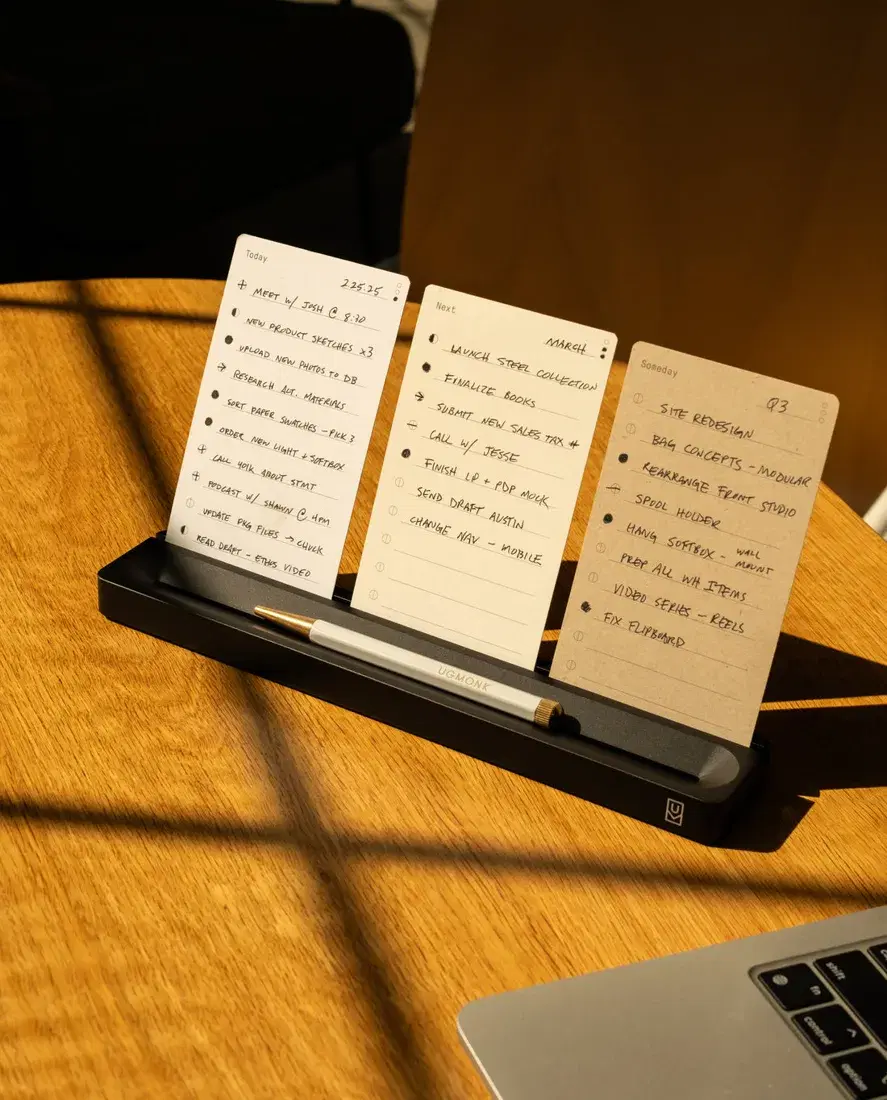
A written card, holder and pencil create a simple sequence: record something and keep it visible. Directional light makes the surface feel tangible, while the action remains easy to understand.
For your own object, photograph the smallest recognisable act of use. A hand turning a dial, a pen being stored or a cable passing through a guide can explain more than a busy desk scene.
Brief the action in plain language
Before discussing lighting, finish the sentence “the customer uses this to…”. If the answer is vague, the shoot brief is not ready. Choose the moment that best demonstrates the answer and decide what must be in focus. A prop earns its place when it clarifies use, size or context.
02 / The material gets its own moment
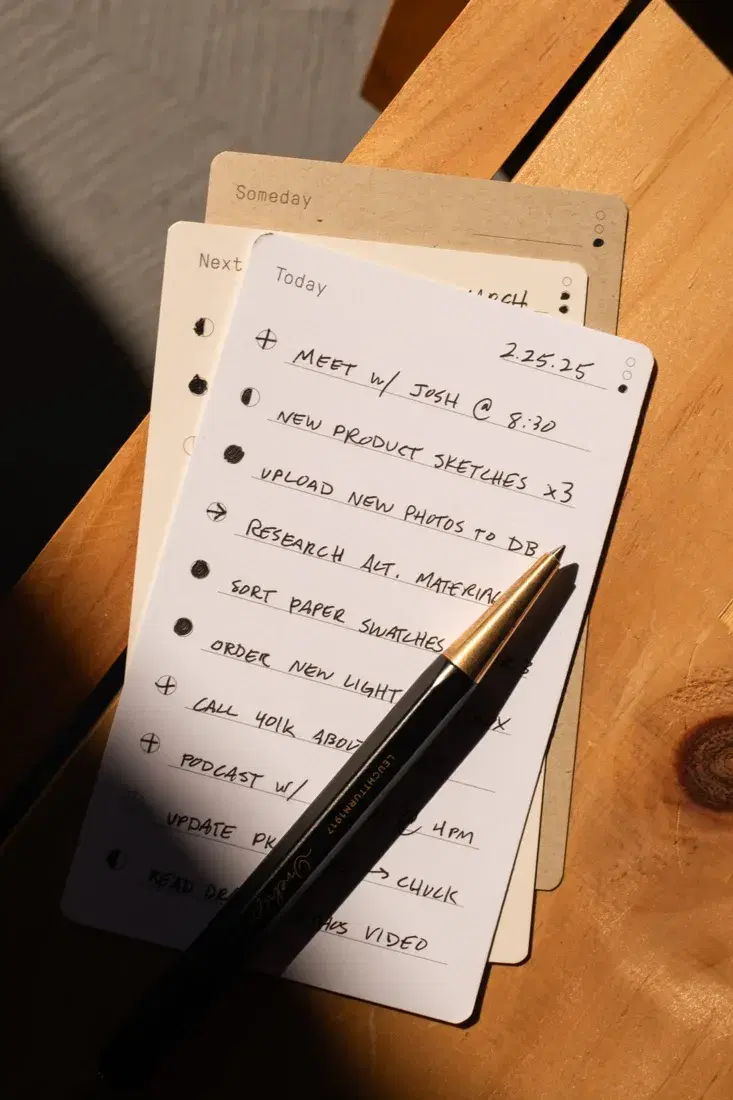
The journal detail places leather, the edge of the cover and the binding close to the viewer. Shallow focus gives the frame a deliberate point of attention.
Give construction its own image when it influences the purchase. Keep an accurate wider view elsewhere in the gallery; a beautiful detail should not hide the dimensions or the rest of the object.
Do not make softness a substitute for detail
A blurred background can create a sense of depth, but the buying-relevant feature still needs to be readable. If the customer needs to inspect a connector, joint or finish, choose the angle and focus for that task. Review at the size the store will actually display, including the mobile zoom experience.
03 / A hand introduces the formats
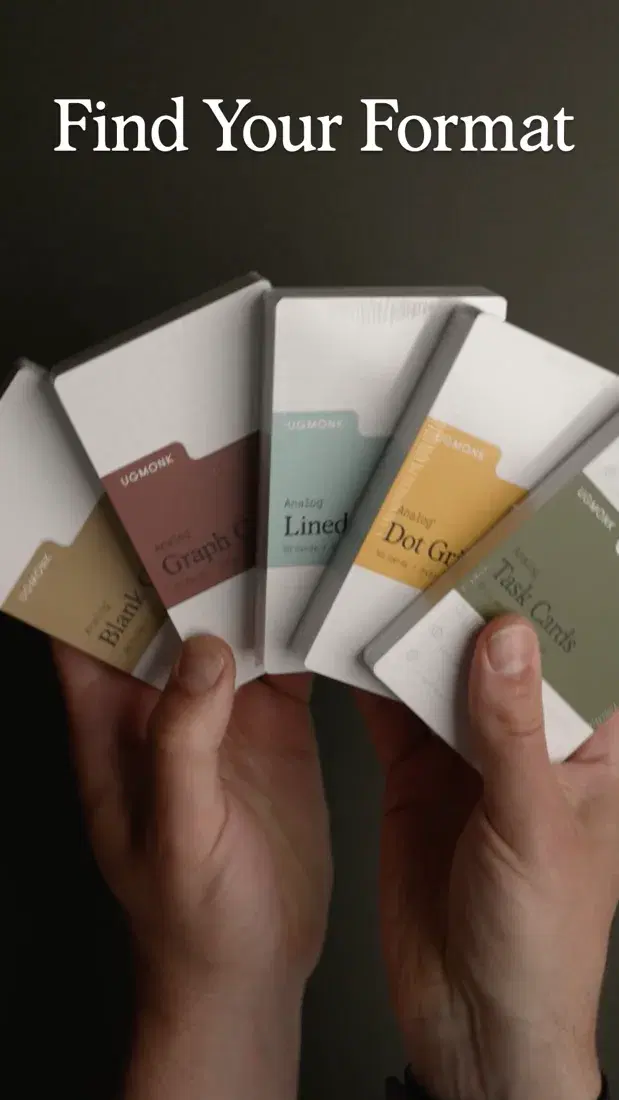
Several card formats are held together, creating a compact comparison. The hand gives a familiar reference and the spread makes the alternatives visible in one frame.
Use a physical reference to introduce scale, then provide exact dimensions. Human hands vary, and perspective can mislead; the photograph should support a measurement rather than replace it.
A practical desk-product shoot plan
- Shoot a clean identifying frame of the selected product.
- Show one real use in a restrained desk setting.
- Make a close frame of the relevant material or mechanism.
- Show size with a familiar reference and publish exact dimensions.
- Create a contents frame if the offer includes several pieces.
- Check every frame against the same product and variant.
For a small catalogue, test the plan with one item before shooting every variant. Put the images into the actual gallery and ask someone unfamiliar with the product to explain what it does, what arrives and how large it is. Their uncertainty is a better revision brief than “make it more premium”.
The search connection is in the explanation
Support the imagery with clear product naming, materials, dimensions and compatibility information in the page text. Use captions where they add meaning and concise alt text appropriate to the image. Avoid repeating a target keyword in every image description. The goal is to make the product easier to understand wherever the customer begins.
See how the same ideas shape a whole store in our Ugmonk brand study.
We study the whole buying journey.
Our work stays focused: Shopify SEO and GEO.