Ugmonk’s Shopify store: selling the ritual around the product
An editorial study of Ugmonk’s product storytelling: useful context, clear components and photography that makes an everyday object easier to understand.
 Ugmonk
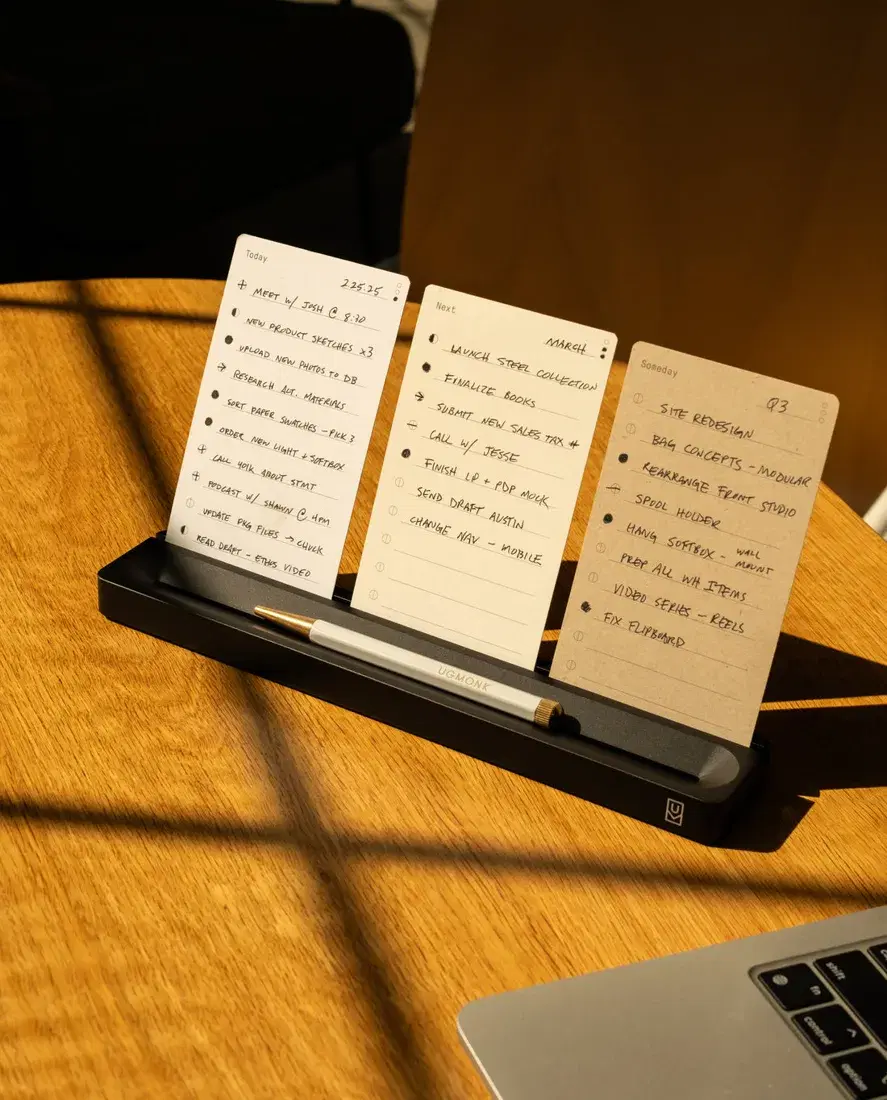
A card holder is a straightforward object. Building a place for it in someone’s day is a more interesting communication problem. Ugmonk’s Analog imagery gives the object a task: capture the work, keep it visible and return to it. You do not need to infer the whole experience from a product name.
A useful object in a recognisable moment
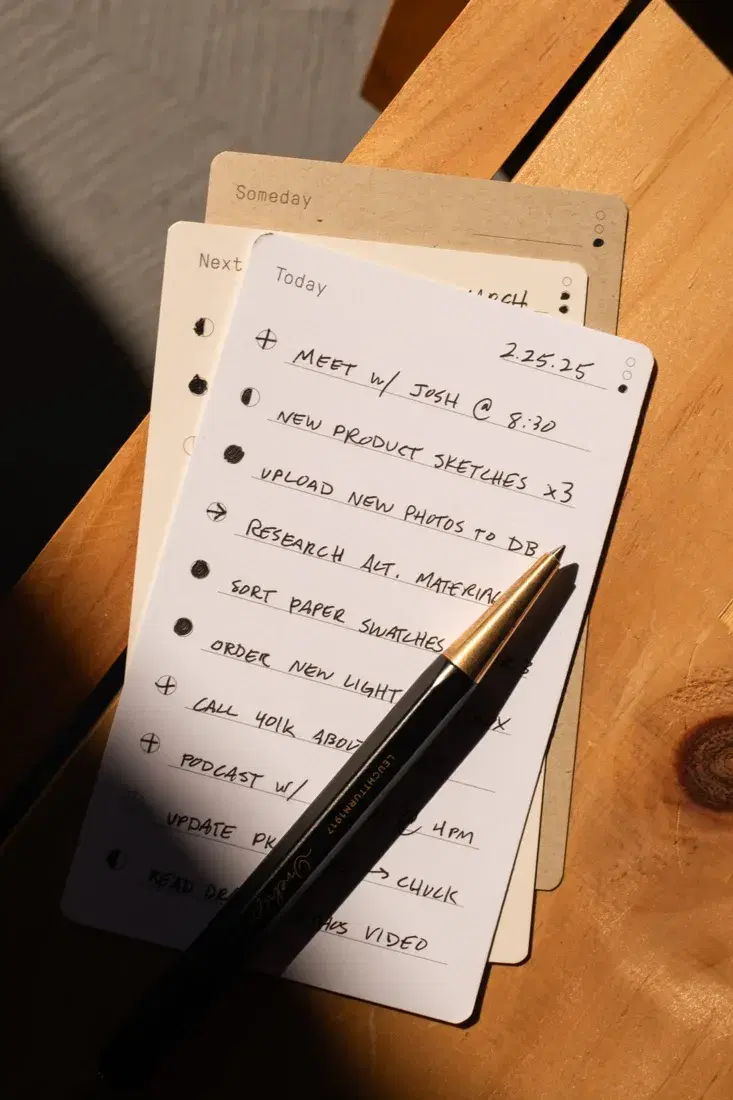
The handwriting does explanatory work
The card contains a task list, and the pencil makes the action easy to understand. Warm directional light gives the frame atmosphere without hiding the item.
Show the product performing its real job. Use a believable example, and avoid filling the scene with props that distract from the action.
Our interpretation is that this image reduces the amount of explanation the object needs. That is a communication observation, not a measured conversion result. The public storefront is the reference; we have no access to Ugmonk’s customer behaviour or creative testing.
Separate the complete offer from the moment of use
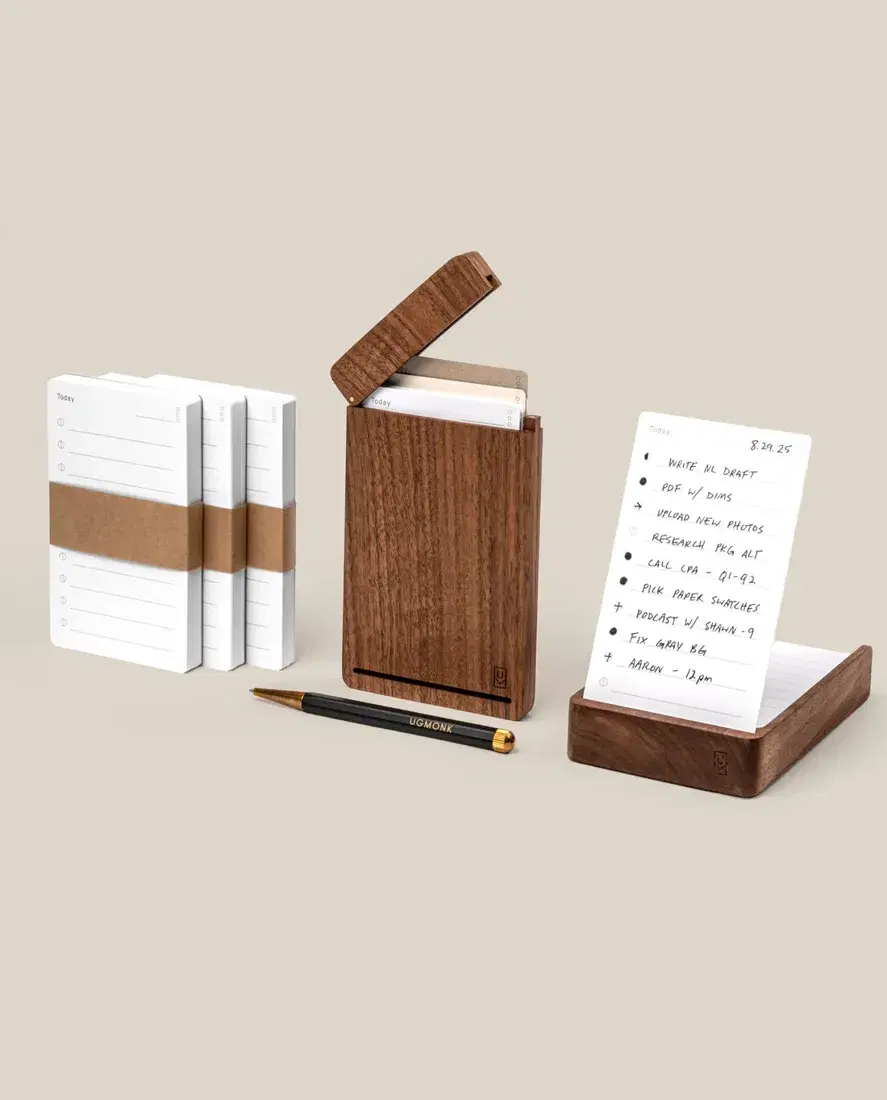
A bundle gets a clear inventory view
The components are arranged so a viewer can see the holder, cards and accessories. The arrangement answers a different question from the desk scene: what is the system made of?
Give a bundle one image that clearly identifies its components. Keep the written contents and selected variant consistent with that image.
For your own store, this suggests two briefs instead of one. The lifestyle brief explains why the object belongs in a routine. The inventory brief explains exactly what the buyer receives. Both can share a visual language without becoming the same photograph.
Let product names stay useful outside the brand
A distinctive range name can be memorable once someone understands it. A new visitor also needs a familiar product category and a plain explanation. When writing a page, pair the name with the object, its use and any important specification. Do not require a customer—or an answer system—to know your internal vocabulary before making sense of it.
This is our recommendation for merchants, not a technical claim about Ugmonk’s search implementation. A useful description could tell a customer that a product is a desk card holder, identify the compatible card format and explain how it is used. The final wording should be based on the item’s actual facts.
A repeatable brief for everyday objects
- Name the action the product supports in one sentence.
- Show that action with a believable hand, surface or surrounding object.
- Create a clean view of the item and any included components.
- Photograph the material or construction detail that supports the buying decision.
- Publish dimensions, compatibility and instructions as accessible text.
The important restraint is to avoid making every image a mood image. A visitor who is already interested may need to inspect an edge, understand scale or check what a bundle includes. Treat the gallery as a sequence of answers, with atmosphere helping the story rather than replacing the information.
For a closer visual breakdown, explore our desk-product photography collection.
We study the whole buying journey.
Our work stays focused: Shopify SEO and GEO.