BÉIS Carry-On Roller: what its comparison content gets right
A product-page study of BÉIS carry-on luggage: dimensions, capacity, use-case labels and range comparison, with an SEO and GEO playbook for competing travel stores.
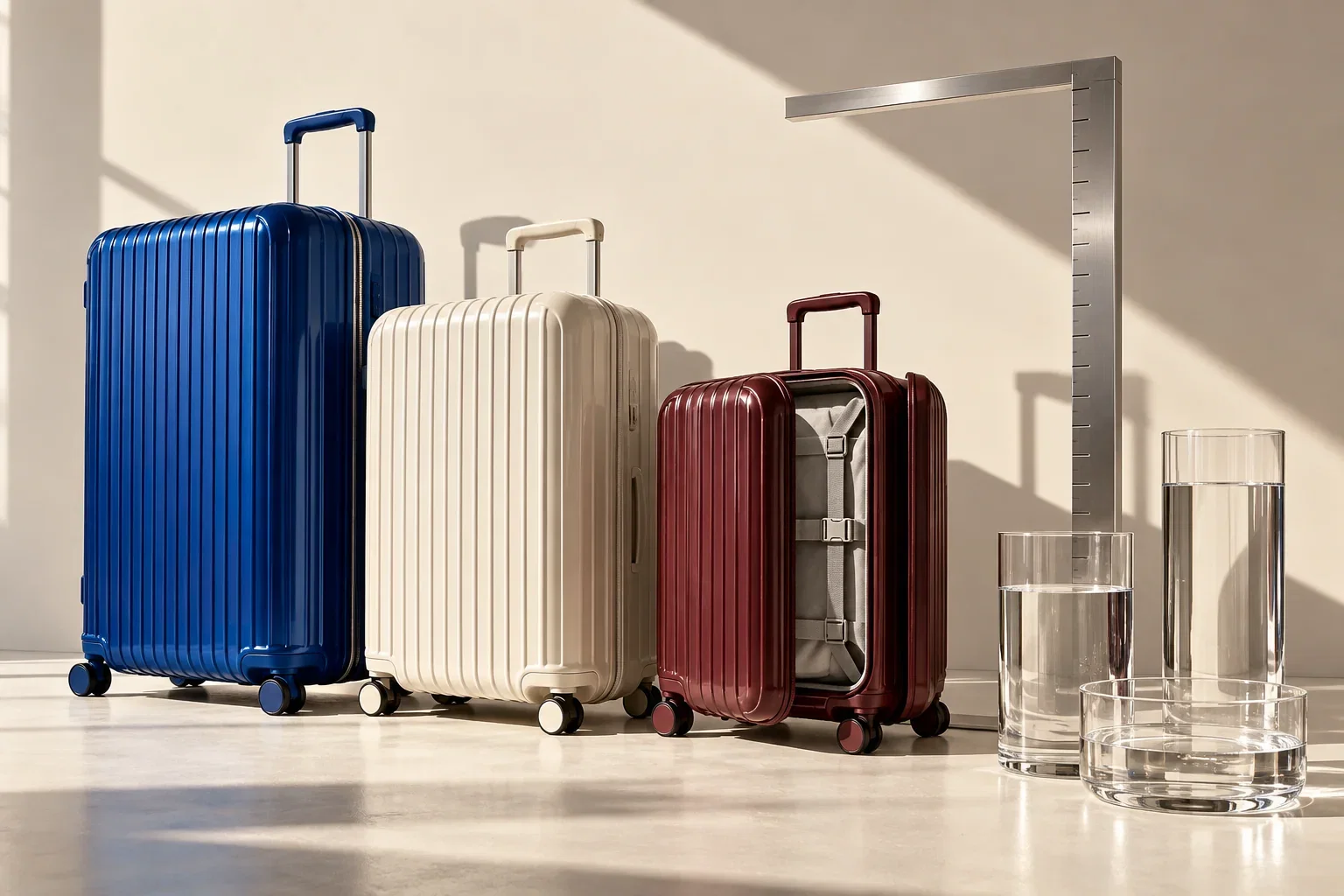
Luggage is a comparison category. Shoppers need to reconcile external dimensions, internal capacity, weight, trip length, airline rules and features. A stylish hero image may start the sale, but specifications and trade-offs finish the decision.
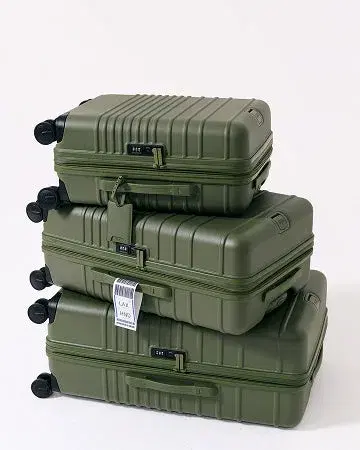
Range imagery introduces the family
A stack of coordinated cases makes the size family visible at a glance. It works because the product page also supplies the numbers the photograph cannot prove.
Use one range image to establish the family, then compare dimensions, weight and capacity in accessible text.
The page uses a memorable audience label
BÉIS describes its Carry-On Roller as suitable for overpackers constrained to a carry-on and “practical maximalists.” The phrase adds personality, but the page does not stop there. It supplies dimensions, weight, expanded capacity, materials and a warning to check the traveller’s airline limits. BÉIS — The Carry-On Roller ↗
Comparison is built into the buying path
The BÉIS carry-on collection distinguishes the Small Carry-On, Carry-On, Hybrid Carry-On and Pro Rolling Backpack through dimensions, capacities and feature differences. This gives a category page a buying job beyond listing products. It also creates a stable source for questions such as which option is smallest, which expands and which carries a laptop. BÉIS — Carry-On Luggage ↗
| Field | Why the buyer needs it | How competitors can improve it |
|---|---|---|
| External dimensions | Airline and storage constraints | Use one dimension order everywhere and provide metric and imperial units. |
| Weight | Baggage limits and handling | State the empty configuration and avoid mixing old and new product revisions. |
| Capacity | A rough indication of space | Explain expanded versus closed capacity and treat outfit counts as estimates. |
| Trip length | A fast orientation cue | Label it as guidance and state the assumptions behind the estimate. |
| Shell and hardware | Durability, repair and preference | Name the actual materials and important replaceable components. |
| Airline fit | A high-stakes compatibility question | Use careful language, link current dimensions and tell shoppers to check their carrier. |
The competitor opportunity is precision
A smaller travel brand does not need a larger feature list. It can win the decision by being easier to verify: explain how capacity was measured, show the exact interior, publish a dated airline-size comparison, state which components are repairable and keep every regional product page consistent.
- Create one carry-on comparison page with every current model and one measurement standard.
- Show closed and expanded dimensions separately.
- Explain the difference between advertised capacity and usable packing space.
- State laptop size, wheel inclusion and handle inclusion wherever those affect a measurement.
- Add a visible updated date to volatile airline compatibility content.
- Answer “when should I choose the smaller one?” with an honest trade-off.
GEO needs the caveat as much as the specification
A useful answer is not “this fits every airline.” It is a bounded statement that names the case dimensions and tells the traveller that carrier and route rules can change. Clear limitations make a passage safer to quote and more useful to a person. They also reduce the chance that a confident recommendation overstates compatibility.
A competitor brief for the next sprint
- Audit every carry-on product for the six comparison fields above.
- Choose one canonical family page and add a compact comparison table.
- Link each comparison choice to the exact product and market.
- Add question-led sections for airline fit, expansion, locks, repairs and care.
- Validate structured data against the selected offer and visible page.
- Track comparison use, product clicks and support questions after release.
Map the category, filters and comparison questions with the free Shopify collection page planner.
We study the whole buying journey.
Our work stays focused: Shopify SEO and GEO.